Buy castlelouisiana.com ?
We are moving the project
castlelouisiana.com .
Are you interested in purchasing the domain
castlelouisiana.com ?
domain@kv-gmbh.de · 0541-91531010
Buy castlelouisiana.com ?
What do you want to say with a culture of recognition?
A culture of recognition is essential for fostering a positive work environment where employees feel valued and appreciated for their contributions. It communicates to employees that their hard work and dedication are noticed and acknowledged, which can boost morale, motivation, and overall job satisfaction. By promoting a culture of recognition, organizations can improve employee engagement, retention, and productivity, ultimately leading to a more successful and thriving workplace. **
What are electricity and high culture history?
Electricity history refers to the development and use of electricity as a form of energy, including the discovery of electricity, the invention of electric devices, and the establishment of electrical systems. High culture history, on the other hand, refers to the history of cultural and artistic achievements that are considered to be of high quality and sophistication, such as classical music, literature, fine arts, and theater. Both electricity and high culture history have evolved over time, shaping the way we live and appreciate the world around us. **


Similar search terms for Want
Top-Angebote
Products related to Want:
-
You Wouldn't Want To Be On Shackleton's Polar Expedition by Jen Green - Paperback - Ages 8-12 - Illustrated True History Adventure - Book HouseStep into the frozen world of Antarctic exploration with You Wouldn't Want To Be On Shackleton's Polar Expedition, a witty and richly illustrated non-fiction title from the bestselling You Wouldn't Want To Be... history series. Written by Jen Green and illustrated by David Antram, this extended edition retells Sir Ernest Shackleton's legendary 1914 Endurance voyage in vivid, first-person style. Packed with humour, danger, and real historical detail, it's an ideal book for young readers who love adventure, geography, and true survival stories. You Wouldn't Want To Be On Shackleton's Polar Expedition places readers directly in the boots of a crew member aboard Shackleton's ill-fated ship, Endurance, as it becomes trapped and eventually crushed by Antarctic pack ice. Jen Green's engaging narrative style brings the story to life, making it a compelling read for curious young explorers.11,99 £*Shipping: 2,99 £Secure redirect to the provider
-
Wibo Choose What i Want Eyeshadow 03 burnt orange 20 grHealth and Beauty Eyes Wibo Choose What i Want Eyeshadow 03 burnt orange 20 gr Duo version eyeshadows. A perfect combination of a matte eyeshadow and a metallic duochrome. A new formula, developed by the WIBO team of technologists, guarantees deep pigmentation and superb durability. The eyeshadows do not smudge and remain on the eyelid for many hours. Color: 03 Burnt Orange2,59 £*Shipping: 3,99 £Secure redirect to the provider
-
Touch of Class I Want a Treat Dog Sculpture White, Large, WhiteWho can resist the sweet, innocent eyes of this West Highland Terrier? The I Want a Treat Dog Sculpture features the off-white pup waiting patiently. Resin accent is available in two sizes. Small measures 10.5 Wx8 Dx13 H. Large is 12 Wx10 Dx16.5 H....99,00 $*Shipping: 18,95 $Secure redirect to the provider




-
Why did Momonosuke's mother want to die in the castle? (One Piece)
Momonosuke's mother, Kozuki Toki, wanted to die in the castle because she believed that it was her destiny to do so. As a member of the Kozuki clan, she had the ability to send herself forward in time, and she used this power to send herself and her son, Momonosuke, 20 years into the future. She knew that her time was coming to an end, and she wanted to fulfill her destiny by dying in the place where she belonged, the Kozuki castle. Additionally, she wanted to ensure that Momonosuke would be able to carry on the legacy of their family in the future. **
-
What is the difference between low culture and high culture in history?
Low culture refers to the cultural activities and products that are considered to be more common, popular, and easily accessible to the general public. This can include things like popular music, television shows, and mass-produced literature. On the other hand, high culture refers to the cultural activities and products that are considered to be more refined, sophisticated, and often associated with the elite or educated classes. This can include things like classical music, fine art, and literature that is considered to be more intellectually challenging. The distinction between low and high culture has been a source of debate and has evolved over time, but it generally reflects the social and class divisions within a society. **
-
Do you need Latin in school if you want to study architecture?
While Latin is not a requirement for studying architecture, it can be beneficial for students interested in the field. Latin is the root of many architectural terms and can provide a deeper understanding of the historical and cultural context of architectural design. Additionally, studying Latin can improve language skills and critical thinking, which are valuable assets for any student pursuing a career in architecture. However, it ultimately depends on the specific curriculum and requirements of the architecture program at the school of interest. **
-
I do not want my parents to see my internet history.
There are several ways to prevent your parents from seeing your internet history. You can use private browsing modes on your web browser, such as Incognito mode in Google Chrome or Private Browsing in Safari. Additionally, you can use a virtual private network (VPN) to encrypt your internet connection and hide your browsing history from your parents. It's also important to regularly clear your browser history and cookies to ensure that your internet activity remains private. **

Does anyone know about the Islamic Golden Age in architecture and culture?
Yes, the Islamic Golden Age was a period of great cultural and architectural achievements in the Islamic world, spanning from the 8th to the 14th century. During this time, Islamic scholars made significant advancements in fields such as mathematics, astronomy, medicine, and philosophy. In terms of architecture, the Islamic world produced stunning examples of mosques, palaces, and other structures, characterized by intricate geometric patterns, domes, and arches. This period also saw the development of beautiful decorative arts such as calligraphy, ceramics, and textiles. Overall, the Islamic Golden Age left a lasting legacy in both architecture and culture. **
Is mass tourism a necessary economic factor or a destruction of culture and environment?
Mass tourism can be seen as a necessary economic factor as it brings in revenue and creates jobs in the tourism industry. However, it can also be destructive to culture and the environment if not managed properly. Overcrowding, pollution, and the commercialization of local traditions can lead to the degradation of cultural heritage and natural resources. Therefore, it is important to strike a balance between the economic benefits of mass tourism and the preservation of culture and the environment. **
Top-Angebote
Products related to Want:
-
Wibo Large Pallet Choose What WantHealth and Beauty Brushes and Accessories Wibo Large Pallet Choose What Want Palette to fill withthe chosen products of the collection.You will create a unique and individual composition with your favorite makeup products.Enjoy your favorite combination • Wibo has a small palette and a large palette with which you can build your own palette and colors.Complete your palette and puzzles with your favorite ringtones together!4,41 £*Shipping: 3,99 £Secure redirect to the provider
-
You Wouldn't Want To Be On Shackleton's Polar Expedition by Jen Green - Paperback - Ages 8-12 - Illustrated True History Adventure - Book HouseStep into the frozen world of Antarctic exploration with You Wouldn't Want To Be On Shackleton's Polar Expedition, a witty and richly illustrated non-fiction title from the bestselling You Wouldn't Want To Be... history series. Written by Jen Green and illustrated by David Antram, this extended edition retells Sir Ernest Shackleton's legendary 1914 Endurance voyage in vivid, first-person style. Packed with humour, danger, and real historical detail, it's an ideal book for young readers who love adventure, geography, and true survival stories. You Wouldn't Want To Be On Shackleton's Polar Expedition places readers directly in the boots of a crew member aboard Shackleton's ill-fated ship, Endurance, as it becomes trapped and eventually crushed by Antarctic pack ice. Jen Green's engaging narrative style brings the story to life, making it a compelling read for curious young explorers.11,99 £*Shipping: 2,99 £Secure redirect to the provider
-
What do you want to say with a culture of recognition?
A culture of recognition is essential for fostering a positive work environment where employees feel valued and appreciated for their contributions. It communicates to employees that their hard work and dedication are noticed and acknowledged, which can boost morale, motivation, and overall job satisfaction. By promoting a culture of recognition, organizations can improve employee engagement, retention, and productivity, ultimately leading to a more successful and thriving workplace. **
-
What are electricity and high culture history?
Electricity history refers to the development and use of electricity as a form of energy, including the discovery of electricity, the invention of electric devices, and the establishment of electrical systems. High culture history, on the other hand, refers to the history of cultural and artistic achievements that are considered to be of high quality and sophistication, such as classical music, literature, fine arts, and theater. Both electricity and high culture history have evolved over time, shaping the way we live and appreciate the world around us. **
-
Why did Momonosuke's mother want to die in the castle? (One Piece)
Momonosuke's mother, Kozuki Toki, wanted to die in the castle because she believed that it was her destiny to do so. As a member of the Kozuki clan, she had the ability to send herself forward in time, and she used this power to send herself and her son, Momonosuke, 20 years into the future. She knew that her time was coming to an end, and she wanted to fulfill her destiny by dying in the place where she belonged, the Kozuki castle. Additionally, she wanted to ensure that Momonosuke would be able to carry on the legacy of their family in the future. **
-
What is the difference between low culture and high culture in history?
Low culture refers to the cultural activities and products that are considered to be more common, popular, and easily accessible to the general public. This can include things like popular music, television shows, and mass-produced literature. On the other hand, high culture refers to the cultural activities and products that are considered to be more refined, sophisticated, and often associated with the elite or educated classes. This can include things like classical music, fine art, and literature that is considered to be more intellectually challenging. The distinction between low and high culture has been a source of debate and has evolved over time, but it generally reflects the social and class divisions within a society. **
Similar search terms for Want
-
Wibo Choose What i Want Eyeshadow 03 burnt orange 20 grHealth and Beauty Eyes Wibo Choose What i Want Eyeshadow 03 burnt orange 20 gr Duo version eyeshadows. A perfect combination of a matte eyeshadow and a metallic duochrome. A new formula, developed by the WIBO team of technologists, guarantees deep pigmentation and superb durability. The eyeshadows do not smudge and remain on the eyelid for many hours. Color: 03 Burnt Orange2,59 £*Shipping: 3,99 £Secure redirect to the provider
-
Touch of Class I Want a Treat Dog Sculpture White, Large, WhiteWho can resist the sweet, innocent eyes of this West Highland Terrier? The I Want a Treat Dog Sculpture features the off-white pup waiting patiently. Resin accent is available in two sizes. Small measures 10.5 Wx8 Dx13 H. Large is 12 Wx10 Dx16.5 H....99,00 $*Shipping: 18,95 $Secure redirect to the provider
-
Dorling Kindersley My Encyclopedia Of Very Important Things - For Little Learners Who Want To Know EverythingA charming children's encyclopedia bursting with facts about the world, animals, people, planets, and, most importantly, you! The world is so much bigger than young minds can fathom and there is always more to learn. My Encyclopedia of Very Important Things is a mind-boggling visual collection of everything interesting to get you on your way to knowing it all. Full of fun facts for kids, colourful illustrations, and games that will feed your imagination, this kids encyclopedia is filled with age-appropriate knowledge on a range of topics that are complementary to your school's curriculum. - Read hundreds of exciting facts - Learn all about amazing animals, people, and places - Discover the wonders of our incredible planet, and more Go on a journey to explore a world of information. Learn about just how many animals are there and how they live and communicate. Find out about our history - cavemen, the first explorers, ancient Egyptians, and even dinosaurs. There's so much crammed into one place and it's all put into colourful and engaging ways suitable for young inquisitive minds. Tell The Story Of The World One Page At A Time! Our encyclopedia for children is the perfect blending of adorable, simple illustrations with rich photography and lively text. Made for you and young minds to read together or alone and formatted with a ribbon bookmark to pick up right wherever you left off. This truly is the ideal first reference book for young readers.7,99 £*Shipping: 2,99 £Secure redirect to the provider
-
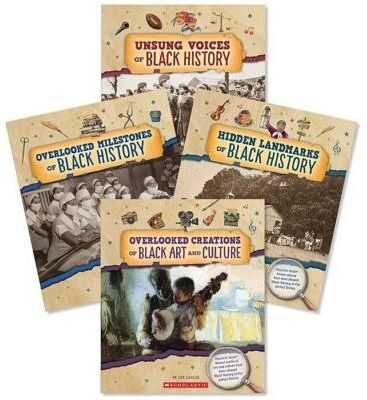
From the Archives: Black History and Culture Value PackThis brand-new series is rooted in a profound commitment to shedding light on some of the important -- and often lesser-known -- aspects of Black history. From the Archives features landmarks, events, people, and artistic endeavors that have played...27,99 $*Shipping: 0,00 $Secure redirect to the provider
-
Do you need Latin in school if you want to study architecture?
While Latin is not a requirement for studying architecture, it can be beneficial for students interested in the field. Latin is the root of many architectural terms and can provide a deeper understanding of the historical and cultural context of architectural design. Additionally, studying Latin can improve language skills and critical thinking, which are valuable assets for any student pursuing a career in architecture. However, it ultimately depends on the specific curriculum and requirements of the architecture program at the school of interest. **
-
I do not want my parents to see my internet history.
There are several ways to prevent your parents from seeing your internet history. You can use private browsing modes on your web browser, such as Incognito mode in Google Chrome or Private Browsing in Safari. Additionally, you can use a virtual private network (VPN) to encrypt your internet connection and hide your browsing history from your parents. It's also important to regularly clear your browser history and cookies to ensure that your internet activity remains private. **
-
Does anyone know about the Islamic Golden Age in architecture and culture?
Yes, the Islamic Golden Age was a period of great cultural and architectural achievements in the Islamic world, spanning from the 8th to the 14th century. During this time, Islamic scholars made significant advancements in fields such as mathematics, astronomy, medicine, and philosophy. In terms of architecture, the Islamic world produced stunning examples of mosques, palaces, and other structures, characterized by intricate geometric patterns, domes, and arches. This period also saw the development of beautiful decorative arts such as calligraphy, ceramics, and textiles. Overall, the Islamic Golden Age left a lasting legacy in both architecture and culture. **
-
Is mass tourism a necessary economic factor or a destruction of culture and environment?
Mass tourism can be seen as a necessary economic factor as it brings in revenue and creates jobs in the tourism industry. However, it can also be destructive to culture and the environment if not managed properly. Overcrowding, pollution, and the commercialization of local traditions can lead to the degradation of cultural heritage and natural resources. Therefore, it is important to strike a balance between the economic benefits of mass tourism and the preservation of culture and the environment. **
* All prices are inclusive of VAT and, if applicable, plus shipping costs. The offer information is based on the details provided by the respective shop and is updated through automated processes. Real-time updates do not occur, so deviations can occur in individual cases. ** Note: Parts of this content were created by AI.