Buy castlelouisiana.com ?
We are moving the project
castlelouisiana.com .
Are you interested in purchasing the domain
castlelouisiana.com ?
domain@kv-gmbh.de · 0541-91531010
Buy castlelouisiana.com ?
Is the 8-year-old Merlot still drinkable?
It is possible that an 8-year-old Merlot is still drinkable, as Merlot wines can age well depending on the producer and storage conditions. However, it is important to note that not all Merlots are meant for long-term aging, so the quality of the wine may have deteriorated over time. To determine if the wine is still drinkable, it is recommended to taste a small amount and assess its aroma, flavor, and overall balance. **
How long is the shelf life of Merlot red wine?
The shelf life of Merlot red wine can vary depending on how it is stored. Generally, an unopened bottle of Merlot can be stored for 3-5 years in a cool, dark place. Once opened, the wine should be consumed within 3-5 days to ensure optimal taste and quality. It is important to re-cork the bottle and store it in the refrigerator to help preserve the wine. **
Similar search terms for Merlot
Top-Angebote
Products related to Merlot:
-
Merlot Mlecnik 2015The Merlot from the Slovenian winery Mlecnik is an artisanal interpretation of remarkable richness and charm, produced in the Vipavska Dolina area. For over two centuries, the Mlecnik family has been the custodian of this region, but it was at the end of the 1980s that the actual qualitative leap occurred with the abandonment of bulk wine sales in favor of internal bottling under their own name. Today, the winery is led by Valter Mlecnik, a talented winemaker who has been skilled in respecting the ancient and established traditions passed down through generations. The Mlecnik Merlot Vipavska Dolina is made from only Merlot grapes grown in soils composed of marls, clays, and limestone rocks in accordance with the principles of organic farming, certified since 2005. Once the clusters have reached the perfect degree of ripeness, manual harvesting and crushing take place, with alcoholic fermentation conducted exclusively by indigenous yeasts. The subsequent aging period takes place in oak barrels for 24 months, at the end of which the wine is bottled. Throughout the entire winemaking process, the mass undergoes no clarification, filtration, or addition of sulfur. The Slovenian Merlot from Mlecnik displays a garnet red color with violet hues. The vivid olfactory mosaic is defined by fruity and floral aromas, adorned with scents of tomato leaf and tobacco. On the palate, it shows remarkable balance between silky softness and brilliant freshness, with a rich and complex tannic structure. The finish is long-lasting with exceptional flavor-aroma correspondence. A Merlot of excellent versatility in food-wine pairing, suitable for dishes based on various meats, aged cheeses, and flavorful mushroom preparations.50,00 £*Shipping: 48,00 £Secure redirect to the provider
-
Merlot 'Verdugo' Masiero 2018Merlot 'Verdugo' is not only one of the most representative wines of the Vicenza-based Masiero winery, but also represents its most authentic face, expressing its soul and essence. It is the synthesis of a journey that began in 2001 with the creation of the vineyard and the choice of a Bordeaux grape variety particularly suited to the local soil and climate conditions. The excellent quality of the grapes suggested the creation of a red wine with a good structure, which also thanks to long ageing in wood presents a rich aromatic complexity and considerable longevity. It conquers with its soft personality, its intense and dense fruit, and its immediate and lively taste pleasure. Verdugo' is a Merlot made near Trissino, where Franco Masiero owns a family-run estate, managed with great passion. The activity began almost as a pastime, with the first Merlot vines planted with the idea of producing some wine to share with friends. The encouraging results of the first vinifications then led to a more ambitious and structured project. The soils are of ancient volcanic origin, rich in minerals. The vineyards are managed according to biodynamic principles, with the utmost respect for the environment. Treatments are only carried out with sulphur, copper and natural preparations. Harvesting is carried out manually and the Merlot grapes are fermented spontaneously using only indigenous yeasts in open vats, with about three weeks' maceration on the skins. The wine matures for a period of approximately one year in large oak barrels and completes the ageing process with a further 12 months in the bottle. Masiero's red Merlot 'Verdugo' is a wine made with spirit and craftsmanship, born of Franco's great love for his land and his passion for viticulture. It is the fruit of a great deal of work in the vineyard, which is reflected in its frank and genuine character. Bright ruby red in colour, it expresses on the nose intense aromas of small berries, wild blackberries, currants, raspberries, delicate spicy hints and nuances of officinal and balsamic herbs, typical of the evolution of Merlot. With a good structure, it presents a fine tannic texture, well integrated and enveloped by a dense and juicy fruit, which conquers for its breadth, richness and expressive harmony. The finish is of good persistence.29,00 £*Shipping: 48,00 £Secure redirect to the provider
-
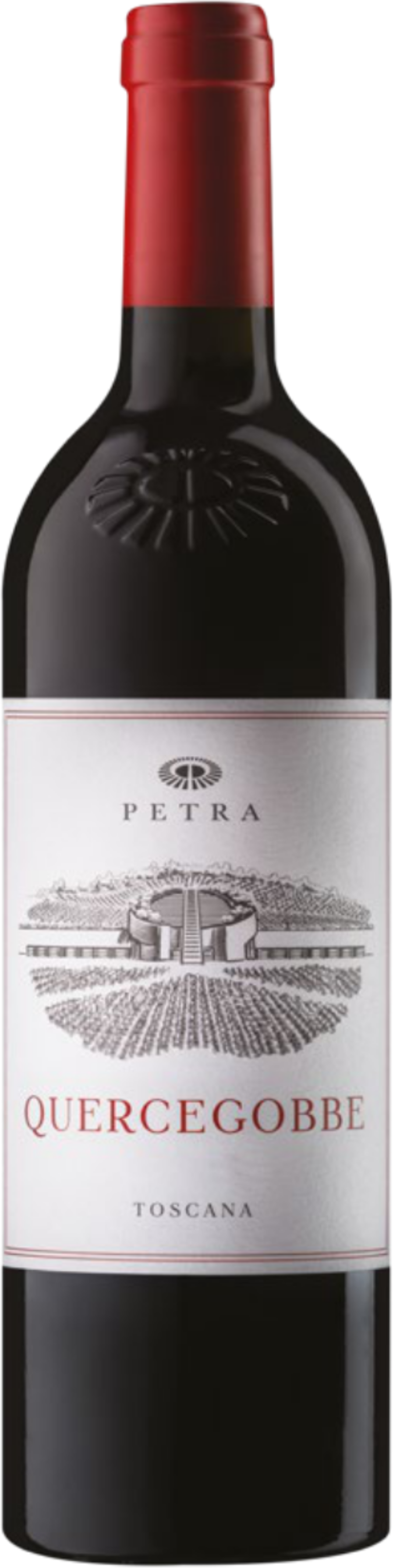
Merlot 'Quercegobbe' Petra 2024Il Merlot “Quercegobbe” di Petra è un rosso d’ispirazione bordolese, ricco, intenso e complesso, che esprime al meglio il carattere mediterraneo del terroir. Le uve provengono da una parcella particolarmente vocata della tenuta, che ogni anno dona uve di qualità superiore per equilibrio e ricchezza aromatica. La grande maturità di frutto di una zona solare e mite come la costa toscana, permette al vitigno di regalare un rosso di grande piacevolezza fruttata, accompagnata da raffinate note d’evoluzione terziaria, dovuta al lungo affinamento in legno. Una bottiglia particolarmente adatta a chi ama il sorso morbido ed elegante. Il “Quercegobbe” è un Merlot che nasce nella proprietà toscana della famiglia Moretti, già titolare del famoso marchio Bellavista in Franciacorta. La tenuta Petra si estende su circa 60 ettari in Val di Cornia, nel cuore della maremma toscana. Le uve di Merlot provengono solo dal Vigneto Quercegobbe, che si trova in località San Lorenzo Alto, un vero e proprio cru aziendale immerso in una rigogliosa macchia mediterranea, in una posizione soleggiata e sempre ben ventilata rivolta verso il mare. Le viti hanno un’età di circa 18 anni e sono piantate su terreni di matrice argillo-sabbiosa, con componenti calcaree. Al termine della vendemmia, i migliori grappoli sono fatti fermentare in tini troncoconici di rovere con la classica macerazione sulle bucce. Il vino matura per 15 mesi, in parte in demi muid nuovi da 600 litri, in parte in barrique di secondo passaggio e completa l’affinamento con ulteriori 10 mesi in bottiglia prima della messa in commercio. Il rosso Merlot “Quercegobbe” della cantina Petra è figlio del carattere forte e deciso della maremma toscana e del suo clima caldo e solare. Nel calice si presenta di colore rosso rubino scuro. All’olfatto esprime profumi intensi di ribes, ciliegia, amarena, confettura di piccoli frutti a bacca scura, cenni di arbusti spontanei della macchia mediterranea, rosmarino, elicriso, mirto, radice di liquirizia e delicate sfumature speziate. Al palato ha una buona struttura, una trama tannica vellutata e ben integrata al corpo del vino. Il frutto è denso e ricco, con aromi eleganti e armoniosi, che si allungano verso un finale equilibrato, fresco e di grande persistenza gustativa.28,00 £*Shipping: 48,00 £Secure redirect to the provider


-
What are the taste differences between Merlot and Bordeaux wine?
Merlot and Bordeaux wines are both red wines, but they have distinct taste differences. Merlot is known for its smooth, velvety texture and flavors of ripe fruit, such as plum, cherry, and berry. It also often has notes of chocolate and herbs. Bordeaux wine, on the other hand, is a blend of several grape varieties, including Merlot, Cabernet Sauvignon, and Cabernet Franc. Bordeaux wines tend to be more complex, with flavors of blackcurrant, cedar, and tobacco, and have a firmer tannic structure. Bordeaux wines also often have a longer aging potential compared to Merlot. **
-
What are electricity and high culture history?
Electricity history refers to the development and use of electricity as a form of energy, including the discovery of electricity, the invention of electric devices, and the establishment of electrical systems. High culture history, on the other hand, refers to the history of cultural and artistic achievements that are considered to be of high quality and sophistication, such as classical music, literature, fine arts, and theater. Both electricity and high culture history have evolved over time, shaping the way we live and appreciate the world around us. **
-
What is the difference between low culture and high culture in history?
Low culture refers to the cultural activities and products that are considered to be more common, popular, and easily accessible to the general public. This can include things like popular music, television shows, and mass-produced literature. On the other hand, high culture refers to the cultural activities and products that are considered to be more refined, sophisticated, and often associated with the elite or educated classes. This can include things like classical music, fine art, and literature that is considered to be more intellectually challenging. The distinction between low and high culture has been a source of debate and has evolved over time, but it generally reflects the social and class divisions within a society. **
-
Does anyone know about the Islamic Golden Age in architecture and culture?
Yes, the Islamic Golden Age was a period of great cultural and architectural achievements in the Islamic world, spanning from the 8th to the 14th century. During this time, Islamic scholars made significant advancements in fields such as mathematics, astronomy, medicine, and philosophy. In terms of architecture, the Islamic world produced stunning examples of mosques, palaces, and other structures, characterized by intricate geometric patterns, domes, and arches. This period also saw the development of beautiful decorative arts such as calligraphy, ceramics, and textiles. Overall, the Islamic Golden Age left a lasting legacy in both architecture and culture. **
Is mass tourism a necessary economic factor or a destruction of culture and environment?
Mass tourism can be seen as a necessary economic factor as it brings in revenue and creates jobs in the tourism industry. However, it can also be destructive to culture and the environment if not managed properly. Overcrowding, pollution, and the commercialization of local traditions can lead to the degradation of cultural heritage and natural resources. Therefore, it is important to strike a balance between the economic benefits of mass tourism and the preservation of culture and the environment. **
What is a question about the history of Romanesque architecture?
How did Romanesque architecture evolve from the earlier Carolingian and Byzantine styles? **
Top-Angebote
Products related to Merlot:
-
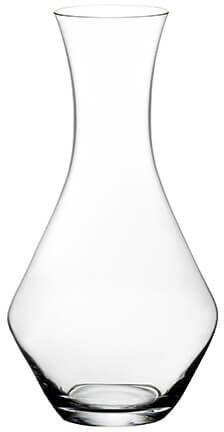
Riedel Merlot DecanterThis unique and stylish Riedel Decanter is suitable for allowing Merlot wines to breathe before serving. The design of the Decanter allows the wine to be served whilst producing the best possible taste and aroma. Each Decanter is machine blown crystal glass and marked with the unique Riedel lettering as a genuine and distinguishing feature. Older wines can be decanted and served almost straight away, whereas newer wines benefit from breathing for longer once in your Decanter. 970ml capacity. Measures 24cm high and widest part 11.5cm.48,00 £*Shipping: 3,50 £Secure redirect to the provider
-
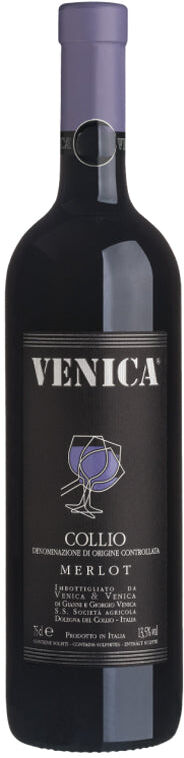
Merlot Venica 2023containers of steel, macerating on the skins for 8 days; the malolactic fermentation is carried out subsequently, in oak barrels. Always in wood, the wine then rests for 12 months, after which it is bottled and marketed. The Venica Merlot presents itself to the eye with a beautiful red color reminiscent of the shade of ruby. On the nose, a mix of fruity sensations is perceived, enriched by some more vegetal touches and a slight hint of spices at the finish. On the palate, it is medium-bodied, balanced, with a enveloping sip dominated by fine and well-crafted tannins. A Friulian red that transports us into the fascinating terroir of Collio, a place where important wines are born and appreciated by all enthusiasts.steel containers, macerating on the skins for 8 days; the malolactic fermentation is carried out subsequently, in oak barrels. Always in wood, the wine then rests for 12 months, after which it is bottled and marketed. The Venica Merlot presents itself to the eye with a beautiful red color reminiscent of the shade of ruby. On the nose, a mix of fruity sensations is perceived, enriched by some more vegetal touches and a slight hint of spices at the finish. On the palate, it is medium-bodied, balanced, with an enveloping sip dominated by fine and well-crafted tannins. A Friulian red that transports us into the fascinating terroir of Collio, a place where important wines are born and appreciated by all enthusiasts.19,00 £*Shipping: 48,00 £Secure redirect to the provider
-
Merlot Mlecnik 2015The Merlot from the Slovenian winery Mlecnik is an artisanal interpretation of remarkable richness and charm, produced in the Vipavska Dolina area. For over two centuries, the Mlecnik family has been the custodian of this region, but it was at the end of the 1980s that the actual qualitative leap occurred with the abandonment of bulk wine sales in favor of internal bottling under their own name. Today, the winery is led by Valter Mlecnik, a talented winemaker who has been skilled in respecting the ancient and established traditions passed down through generations. The Mlecnik Merlot Vipavska Dolina is made from only Merlot grapes grown in soils composed of marls, clays, and limestone rocks in accordance with the principles of organic farming, certified since 2005. Once the clusters have reached the perfect degree of ripeness, manual harvesting and crushing take place, with alcoholic fermentation conducted exclusively by indigenous yeasts. The subsequent aging period takes place in oak barrels for 24 months, at the end of which the wine is bottled. Throughout the entire winemaking process, the mass undergoes no clarification, filtration, or addition of sulfur. The Slovenian Merlot from Mlecnik displays a garnet red color with violet hues. The vivid olfactory mosaic is defined by fruity and floral aromas, adorned with scents of tomato leaf and tobacco. On the palate, it shows remarkable balance between silky softness and brilliant freshness, with a rich and complex tannic structure. The finish is long-lasting with exceptional flavor-aroma correspondence. A Merlot of excellent versatility in food-wine pairing, suitable for dishes based on various meats, aged cheeses, and flavorful mushroom preparations.50,00 £*Shipping: 48,00 £Secure redirect to the provider
-
Is the 8-year-old Merlot still drinkable?
It is possible that an 8-year-old Merlot is still drinkable, as Merlot wines can age well depending on the producer and storage conditions. However, it is important to note that not all Merlots are meant for long-term aging, so the quality of the wine may have deteriorated over time. To determine if the wine is still drinkable, it is recommended to taste a small amount and assess its aroma, flavor, and overall balance. **
-
How long is the shelf life of Merlot red wine?
The shelf life of Merlot red wine can vary depending on how it is stored. Generally, an unopened bottle of Merlot can be stored for 3-5 years in a cool, dark place. Once opened, the wine should be consumed within 3-5 days to ensure optimal taste and quality. It is important to re-cork the bottle and store it in the refrigerator to help preserve the wine. **
-
What are the taste differences between Merlot and Bordeaux wine?
Merlot and Bordeaux wines are both red wines, but they have distinct taste differences. Merlot is known for its smooth, velvety texture and flavors of ripe fruit, such as plum, cherry, and berry. It also often has notes of chocolate and herbs. Bordeaux wine, on the other hand, is a blend of several grape varieties, including Merlot, Cabernet Sauvignon, and Cabernet Franc. Bordeaux wines tend to be more complex, with flavors of blackcurrant, cedar, and tobacco, and have a firmer tannic structure. Bordeaux wines also often have a longer aging potential compared to Merlot. **
-
What are electricity and high culture history?
Electricity history refers to the development and use of electricity as a form of energy, including the discovery of electricity, the invention of electric devices, and the establishment of electrical systems. High culture history, on the other hand, refers to the history of cultural and artistic achievements that are considered to be of high quality and sophistication, such as classical music, literature, fine arts, and theater. Both electricity and high culture history have evolved over time, shaping the way we live and appreciate the world around us. **
Similar search terms for Merlot
-
Merlot 'Verdugo' Masiero 2018Merlot 'Verdugo' is not only one of the most representative wines of the Vicenza-based Masiero winery, but also represents its most authentic face, expressing its soul and essence. It is the synthesis of a journey that began in 2001 with the creation of the vineyard and the choice of a Bordeaux grape variety particularly suited to the local soil and climate conditions. The excellent quality of the grapes suggested the creation of a red wine with a good structure, which also thanks to long ageing in wood presents a rich aromatic complexity and considerable longevity. It conquers with its soft personality, its intense and dense fruit, and its immediate and lively taste pleasure. Verdugo' is a Merlot made near Trissino, where Franco Masiero owns a family-run estate, managed with great passion. The activity began almost as a pastime, with the first Merlot vines planted with the idea of producing some wine to share with friends. The encouraging results of the first vinifications then led to a more ambitious and structured project. The soils are of ancient volcanic origin, rich in minerals. The vineyards are managed according to biodynamic principles, with the utmost respect for the environment. Treatments are only carried out with sulphur, copper and natural preparations. Harvesting is carried out manually and the Merlot grapes are fermented spontaneously using only indigenous yeasts in open vats, with about three weeks' maceration on the skins. The wine matures for a period of approximately one year in large oak barrels and completes the ageing process with a further 12 months in the bottle. Masiero's red Merlot 'Verdugo' is a wine made with spirit and craftsmanship, born of Franco's great love for his land and his passion for viticulture. It is the fruit of a great deal of work in the vineyard, which is reflected in its frank and genuine character. Bright ruby red in colour, it expresses on the nose intense aromas of small berries, wild blackberries, currants, raspberries, delicate spicy hints and nuances of officinal and balsamic herbs, typical of the evolution of Merlot. With a good structure, it presents a fine tannic texture, well integrated and enveloped by a dense and juicy fruit, which conquers for its breadth, richness and expressive harmony. The finish is of good persistence.29,00 £*Shipping: 48,00 £Secure redirect to the provider
-
Merlot 'Quercegobbe' Petra 2024Il Merlot “Quercegobbe” di Petra è un rosso d’ispirazione bordolese, ricco, intenso e complesso, che esprime al meglio il carattere mediterraneo del terroir. Le uve provengono da una parcella particolarmente vocata della tenuta, che ogni anno dona uve di qualità superiore per equilibrio e ricchezza aromatica. La grande maturità di frutto di una zona solare e mite come la costa toscana, permette al vitigno di regalare un rosso di grande piacevolezza fruttata, accompagnata da raffinate note d’evoluzione terziaria, dovuta al lungo affinamento in legno. Una bottiglia particolarmente adatta a chi ama il sorso morbido ed elegante. Il “Quercegobbe” è un Merlot che nasce nella proprietà toscana della famiglia Moretti, già titolare del famoso marchio Bellavista in Franciacorta. La tenuta Petra si estende su circa 60 ettari in Val di Cornia, nel cuore della maremma toscana. Le uve di Merlot provengono solo dal Vigneto Quercegobbe, che si trova in località San Lorenzo Alto, un vero e proprio cru aziendale immerso in una rigogliosa macchia mediterranea, in una posizione soleggiata e sempre ben ventilata rivolta verso il mare. Le viti hanno un’età di circa 18 anni e sono piantate su terreni di matrice argillo-sabbiosa, con componenti calcaree. Al termine della vendemmia, i migliori grappoli sono fatti fermentare in tini troncoconici di rovere con la classica macerazione sulle bucce. Il vino matura per 15 mesi, in parte in demi muid nuovi da 600 litri, in parte in barrique di secondo passaggio e completa l’affinamento con ulteriori 10 mesi in bottiglia prima della messa in commercio. Il rosso Merlot “Quercegobbe” della cantina Petra è figlio del carattere forte e deciso della maremma toscana e del suo clima caldo e solare. Nel calice si presenta di colore rosso rubino scuro. All’olfatto esprime profumi intensi di ribes, ciliegia, amarena, confettura di piccoli frutti a bacca scura, cenni di arbusti spontanei della macchia mediterranea, rosmarino, elicriso, mirto, radice di liquirizia e delicate sfumature speziate. Al palato ha una buona struttura, una trama tannica vellutata e ben integrata al corpo del vino. Il frutto è denso e ricco, con aromi eleganti e armoniosi, che si allungano verso un finale equilibrato, fresco e di grande persistenza gustativa.28,00 £*Shipping: 48,00 £Secure redirect to the provider
-
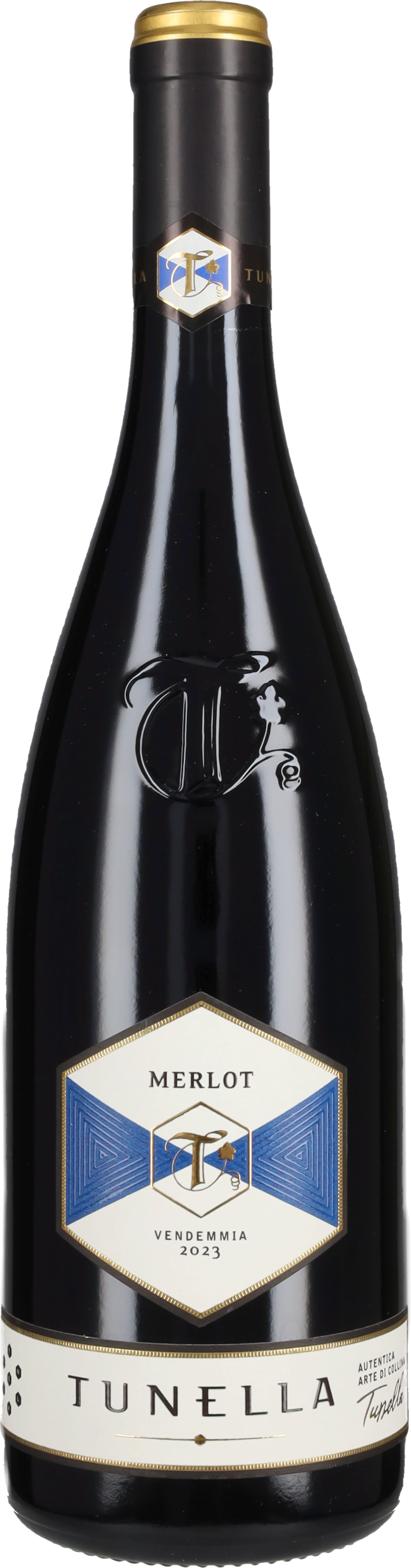
Merlot La Tunella 2024Il Merlot di La Tunella è un vino rosso friulano in cui i sentori varietali emergono nettamente. Merito della grande estrazione che si riesce a ottenere in fase di vinificazione, stadio in cui i profumi primari rappresentano la base su cui si innestano i successivi sentori terziari ceduti dal legno durante la maturazione. Asciutto, morbido e armonico in bocca, ha una beva scorrevole e di personalità, grazie a un tannino espressivo. Un vino che scaturisce da un paesaggio di rara bellezza e suggestività, quello dei Colli Orientali del Friuli, luogo che merita senza dubbio una visita per approfondire il valore dei vini che vi nascono. Il Merlot La Tunella nasce nel territorio dei Colli Orientali del Friuli, area produttiva importante per ciò che riguarda la produzione regionale. Le viti crescono con il sistema del monocapovolto e del guyot francese, e la raccolta si svolge durante l’ultima settimana del mese di Settembre, quando i grappoli raggiungono il massimo grado di maturazione zuccherina e fenolica. Gli acini vengono pressati sofficemente, e il mosto fermenta in vasche d’acciaio a una temperatura controllata, svolgendo anche la malolattica. Il vino scende poi per caduta nella barricaia interrata, dove si prosegue con la fase di affinamento per alcuni mesi in botti di rovere di Slavonia dalla capacità di 25 ettolitri. Il vino rosso Merlot firmato La Tunella si annuncia alla vista con un colore rosso rubino attraversato da trame più granate. La frutta di bosco a bacca nera si annuncia anche con rimandi di marmellata, intervallati da tocchi speziati e sfumature di cacao e tabacco. Entra in bocca con un sorso di buon corpo, morbido e ricco nell’ampiezza, dotato di una particolare persistenza. Un’etichetta che si trova a suo agio in tavola con i menu di terra, e che si può decidere di conservare ancora per tre o quattro anni.17,00 £*Shipping: 48,00 £Secure redirect to the provider
-
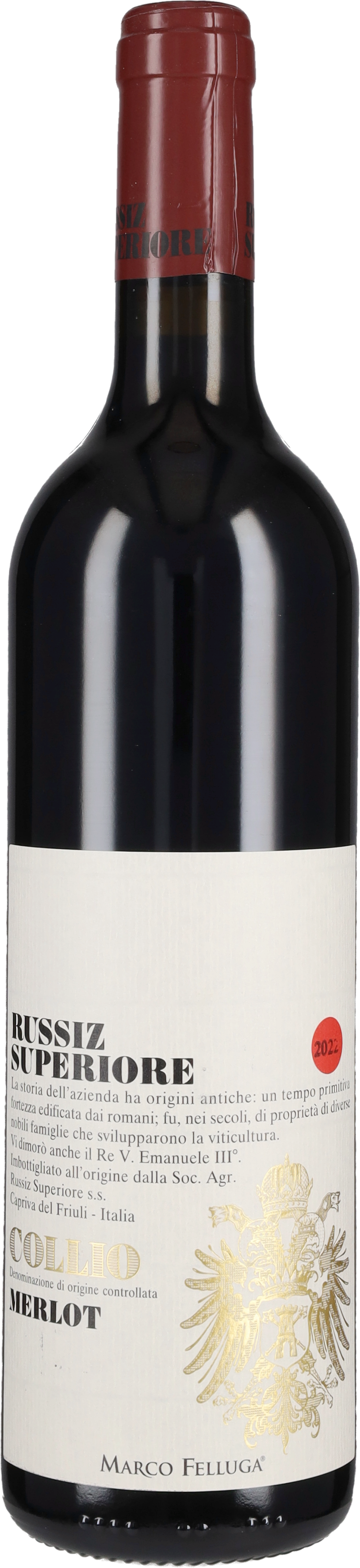
Merlot Russiz Superiore 2022The Merlot Russiz Superiore is a charming and comforting red, an Italian expression among the most representative of one of the most well-known grape varieties in the world. Engaging with Merlot can be a challenging endeavor despite what one might think, as there is a risk of creating standardized expressions, lacking finesse and territoriality. We can confidently say that this is not the case with the Merlot produced by Roberto Felluga, owner of two wineries that have made and are still making the history of the Collio wine region, but which have especially contributed to the consolidation of its prestige on an international level. Roberto, son of Marco, decided to separate the two wineries, vinifying in one only the local indigenous grape varieties, while in the other the international varieties that have now become part of the local ampelography. The stylistic hallmark is common, characterized by elegance and taste definition, very versatile and enjoyable. A certainty among the most solid. The red Merlot is produced with pure grapes of the same name, coming from vineyards located in Capriva del Friuli between 80 and 200 meters above sea level, resting on mixed soil (sand-clay-limestone). After the strictly manual harvest, in order to select the best bunches, fermentation and maceration continue in steel tanks, followed by aging in small oak barrels for one year and an additional six months in bottle before being released on the market. The Merlot wine fills the glass with its intriguing ruby dress edged with garnet reflections. Intense and fragrant nose, characterized by elegant hints of berries, raspberry, cherry in spirit, and vanilla, along with a pleasant herbal note. On the palate, the liquid reveals itself to be soft and filling, perfectly smooth and free of harshness, although never yielding. Exemplary execution.22,00 £*Shipping: 48,00 £Secure redirect to the provider
-
What is the difference between low culture and high culture in history?
Low culture refers to the cultural activities and products that are considered to be more common, popular, and easily accessible to the general public. This can include things like popular music, television shows, and mass-produced literature. On the other hand, high culture refers to the cultural activities and products that are considered to be more refined, sophisticated, and often associated with the elite or educated classes. This can include things like classical music, fine art, and literature that is considered to be more intellectually challenging. The distinction between low and high culture has been a source of debate and has evolved over time, but it generally reflects the social and class divisions within a society. **
-
Does anyone know about the Islamic Golden Age in architecture and culture?
Yes, the Islamic Golden Age was a period of great cultural and architectural achievements in the Islamic world, spanning from the 8th to the 14th century. During this time, Islamic scholars made significant advancements in fields such as mathematics, astronomy, medicine, and philosophy. In terms of architecture, the Islamic world produced stunning examples of mosques, palaces, and other structures, characterized by intricate geometric patterns, domes, and arches. This period also saw the development of beautiful decorative arts such as calligraphy, ceramics, and textiles. Overall, the Islamic Golden Age left a lasting legacy in both architecture and culture. **
-
Is mass tourism a necessary economic factor or a destruction of culture and environment?
Mass tourism can be seen as a necessary economic factor as it brings in revenue and creates jobs in the tourism industry. However, it can also be destructive to culture and the environment if not managed properly. Overcrowding, pollution, and the commercialization of local traditions can lead to the degradation of cultural heritage and natural resources. Therefore, it is important to strike a balance between the economic benefits of mass tourism and the preservation of culture and the environment. **
-
What is a question about the history of Romanesque architecture?
How did Romanesque architecture evolve from the earlier Carolingian and Byzantine styles? **
* All prices are inclusive of VAT and, if applicable, plus shipping costs. The offer information is based on the details provided by the respective shop and is updated through automated processes. Real-time updates do not occur, so deviations can occur in individual cases. ** Note: Parts of this content were created by AI.