Buy castlelouisiana.com ?
We are moving the project
castlelouisiana.com .
Are you interested in purchasing the domain
castlelouisiana.com ?
domain@kv-gmbh.de · 0541-91531010
Buy castlelouisiana.com ?
How do you like Pecorino Romano?
I am an AI and do not have personal preferences, but I can tell you that Pecorino Romano is a popular and versatile cheese with a rich, salty flavor. It is often used in Italian cuisine for grating over pasta dishes, salads, and soups. Its sharp and tangy taste makes it a great addition to many dishes, and it pairs well with bold red wines and fruity white wines. **
What are possible substitutes for Pecorino in recipes?
Possible substitutes for Pecorino in recipes include Parmesan, Grana Padano, Asiago, or Manchego. These cheeses have similar salty and nutty flavors that can provide a comparable taste in recipes. Additionally, if looking for a non-dairy substitute, nutritional yeast can be used to add a cheesy flavor to dishes. Keep in mind that the flavor profile may vary slightly, so it's best to adjust the quantity to taste. **
Similar search terms for Pecorino
Top-Angebote
Products related to Pecorino:
-
Pecorino d'Abruzzo Terraviva 2023brief spontaneous decantation in stainless steel tanks, only indigenous yeasts carry out the alcoholic fermentation at controlled temperature, at the end of which the mass rests for 6 months always in steel before bottling. The Pecorino d’Abruzzo from the Terraviva winery is a lively straw-yellow color. The nose evokes complex scents of citrus and wildflowers, supported by pleasant herbal notes. Fresh and savory on the palate, with a long, light, and harmonious progression. Due to its sensory attributes, this bottle represents an excellent accompaniment to seafood first and second courses, but also to not overly aged cheeses or various land-based appetizers.brief spontaneous decantation in stainless steel tanks, only indigenous yeasts carry out the alcoholic fermentation at controlled temperature, at the end of which the mass rests for 6 months always in steel before bottling. The Pecorino d’Abruzzo from the Terraviva winery is a lively straw-yellow color. The nose evokes complex scents of citrus and wildflowers, supported by pleasant herbal notes. Fresh and savory on the palate, with a long, light, and harmonious progression. Due to its sensory attributes, this bottle represents an excellent accompaniment to seafood first and second courses, but also to not overly aged cheeses or various land-based appetizers.15,00 £*Shipping: 48,00 £Secure redirect to the provider
-
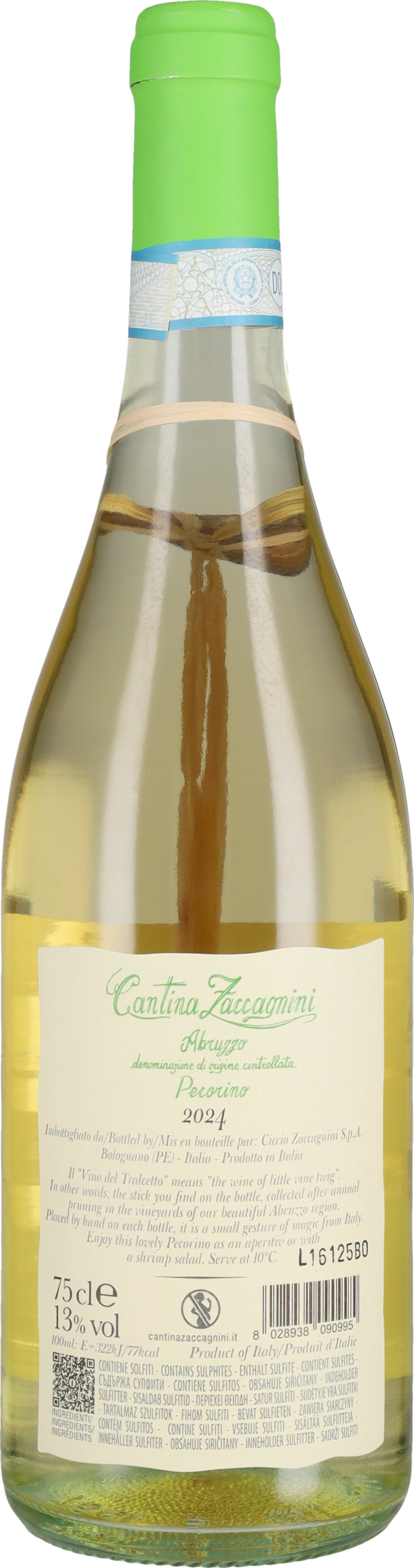
Pecorino 'Chronicon' Zaccagnini 2025The Pecorino “Yamada” is a lively and cheerful expression of a grape variety that well narrates the expressiveness of the whites produced in the central regions of Italy. Fresh on the palate and aromatic on the nose, it is truly a valuable companion at the table, pairing well with both abundant appetizers and the entire meal, especially when matched with first and second courses based on fish and seafood. A versatile label, therefore, made only in steel, with which the Zaccagnini winery confirms itself as one of the most interesting local production realities. The “Yamada” is a pure Pecorino, a white grape variety that is widely spread within the regional borders of Abruzzo. The grapes, after manual harvesting, are taken to the winemaking facilities of Zaccagnini, where they are destemmed. This is followed by a soft pressing of the berries and cryomaceration; the must then ferments in stainless steel containers where the temperature is kept under control. The aging takes place for a few months only in bottle and then the wine can finally be marketed during the spring following the harvest. The Pecorino “Yamada” signed by the Zaccagnini winery develops in the glass with a typically straw-yellow color, influenced by pale reflections tending more towards greenish at the rim. Elegant and delicate on the nose, it is built around honeyed notes and sensations that recall fruit, even exotic in some nuances where a hint of grapefruit is noticeable. On the palate, it is medium-bodied, extremely drinkable thanks to a fresh sip, endowed with a pleasant citrus persistence on the finish. A label that, like all those produced by Zaccagnini, confirms its ability to combine quality with accessible prices for everyone.11,00 £*Shipping: 48,00 £Secure redirect to the provider
-
Pecorino 'Onirocep' Pantaleone 2024Il Pecorino “Onirocep” di Pantalone viene prodotto nelle Marche, in particolare nella zona di Ascoli Piceno in località Collonata Alta. L’attività è di Francesca e Federica Pantaleoni con l’aiuto di loro padre Nazzareno e del marito di Francesca Giuseppe, che svolge il lavoro di enologo. La filosofia di lavoro prevede un’attenzione particolare nei confronti dell’ambiente, dal momento che la scelta è da sempre stata quella di abbracciare il regime di coltivazione biologico, finalizzato a conservare l’equilibrio naturale del territorio, valorizzandone così le potenzialità. Ai piedi della valle che ospita le coltivazioni della cantina, vi è un fossato chiamato “Pantaleone”, parola di origini greche che significa “tutta la forza del leone” ed è collegata a un’antica leggenda popolare, secondo la quale quei terreni possedessero una capacità estrema di dar vita ai frutti migliori. I vigneti del Pecorino “Onirocep” di Pantalone sono esposti a sud-est, il che comporta un’escursione termica performante tra il giorno e la notte e un’irradiamento solare costante per uve ottimamente mature. Il terreno si presenta argilloso, il che garantisce la formazione di sostanza organiche da cui dipendono le capacità nutritive del terreno. L’ambiente circostante è abitato da diverse specie animali compatibili con i vigneti e le coltivazioni, tanto da coadiuvare la crescita della materia prima. La vendemmia è manuale e in cantina si svolgono le fermentazioni in acciaio seguita dalla criomacerazione. Affina 6 mesi in acciaio prima di essere imbottigliato. Nel calice il Pecorino “Onirocep” di Pantalone si presenta si un giallo paglierino con riflessi verdolini brillanti; il bouquet di profumi è ampio e variegato e spiccano sentori di pesca nettarina matura, fiori di ginestra ed erbe aromatiche come rosmarino, timo e agrume dolce buona mineralità finale. In bocca si avvertono calore e morbidezza bilanciati da leggera acidità sul finale che richiama la beva. In abbinamento è consigliato con piatti a base di salumi misti stagionati, primi piatti a base di pesce, verdure di stagione e funghi porcini e secondi piatti a base di crostacei. Ottimo per accompagnare la tavola della cena della Vigilia di Natale e sorseggiare i sapori autentici della terra marchigiana. Imbottigliato da Az. Agr. Pantaleone di Pantaloni Federica18,00 £*Shipping: 48,00 £Secure redirect to the provider
-
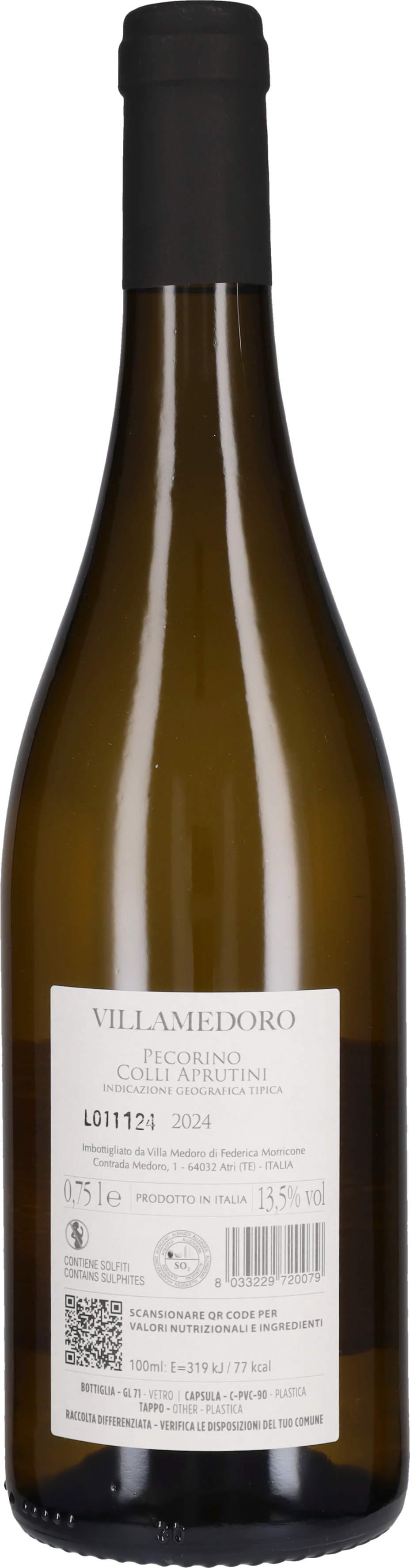
Pecorino Villa Medoro 2025The Pecorino from Villa Medoro is a young, fresh, and very pleasant wine born in the territory of Acri, in the province of Teramo. Here, the vineyards of the winery, climbing along the slopes of the Teramo hills at about 200 meters above sea level, benefit from the gentle sea breezes of the nearby Adriatic Sea and the minerality of the clay and limestone soils. The perfect fusion of the subtle freshness of the hilly climate, the delicate sapidity of the sea, and the warmth of the sun gives rise to this Abruzzese white, praised by wine critics as a beautiful revelation and by enthusiasts as one of the most refreshing, balanced, and pleasant expressions of this native grape variety from Abruzzo, rediscovered only a few years ago. The Villa Medoro winery, strongly committed to enhancing and spreading the Abruzzese winemaking traditions, loves to express the Pecorino in terms of simplicity and immediacy. The grapes are harvested during the month of September, at a state of good ripeness, and transported to the winery, where the bunches undergo a short cryomaceration at a temperature of 5-6°C. This prefermentative operation aims to extract as much as possible the aromatic substances of the grapes, ensuring cleanliness, finesse, and expressive clarity. After the alcoholic fermentation, carried out only in steel at a controlled temperature of 14-16°C, this white wine matures for a few months before being bottled. The Villa Medoro Pecorino stands out in the Abruzzese wine scene for its modern, immediate, and crystalline personality. It shines in the glass with bright straw-yellow hues and greenish reflections. The olfactory profile evokes expanses of wildflowers, with delicate hints of chamomile, yellow flowers, citrus, and ripe fruit. It offers a balanced, fresh, harmonious, and balanced sip, revealing a good sapidity in the final stages of tasting. The delicate, clear, and nuanced taste-olfactory profile promises remarkable gastronomic versatility and favors pairings with simple homemade dishes based on fish or vegetables. It also proves capable of enlivening with finesse and impeccable aplomb the moment of the aperitif or informal convivial occasions.10,00 £*Shipping: 48,00 £Secure redirect to the provider


-
Which cheese should I add to the risotto: Gorgonzola, Parmesan, or Pecorino?
For a classic risotto, Parmesan cheese is the best choice as it has a nutty and salty flavor that complements the creamy texture of the dish. Gorgonzola can also be a good option if you want to add a stronger, tangy flavor to the risotto. Pecorino, on the other hand, has a sharper and saltier taste, which may overpower the other flavors in the dish. Ultimately, the choice of cheese depends on your personal preference and the flavor profile you want to achieve in your risotto. **
-
How do Pecorino and Parmesan differ in terms of price and taste?
Pecorino and Parmesan differ in terms of price and taste. Pecorino is typically less expensive than Parmesan due to the differences in production methods and aging processes. In terms of taste, Pecorino has a sharper and saltier flavor compared to the nutty and slightly fruity taste of Parmesan. The choice between the two cheeses often comes down to personal preference and the specific dish being prepared. **
-
Is it really important to use Pecorino when preparing Pasta Cacio e Pepe?
Yes, it is important to use Pecorino when preparing Pasta Cacio e Pepe because it is a key ingredient that gives the dish its distinct flavor. Pecorino is a hard, salty Italian cheese made from sheep's milk, and its unique taste is essential for achieving the authentic taste of Cacio e Pepe. Using a different type of cheese would alter the flavor profile of the dish and may not result in the traditional taste that is expected from this classic Roman pasta dish. **
-
What are electricity and high culture history?
Electricity history refers to the development and use of electricity as a form of energy, including the discovery of electricity, the invention of electric devices, and the establishment of electrical systems. High culture history, on the other hand, refers to the history of cultural and artistic achievements that are considered to be of high quality and sophistication, such as classical music, literature, fine arts, and theater. Both electricity and high culture history have evolved over time, shaping the way we live and appreciate the world around us. **
What is the difference between low culture and high culture in history?
Low culture refers to the cultural activities and products that are considered to be more common, popular, and easily accessible to the general public. This can include things like popular music, television shows, and mass-produced literature. On the other hand, high culture refers to the cultural activities and products that are considered to be more refined, sophisticated, and often associated with the elite or educated classes. This can include things like classical music, fine art, and literature that is considered to be more intellectually challenging. The distinction between low and high culture has been a source of debate and has evolved over time, but it generally reflects the social and class divisions within a society. **
Does anyone know about the Islamic Golden Age in architecture and culture?
Yes, the Islamic Golden Age was a period of great cultural and architectural achievements in the Islamic world, spanning from the 8th to the 14th century. During this time, Islamic scholars made significant advancements in fields such as mathematics, astronomy, medicine, and philosophy. In terms of architecture, the Islamic world produced stunning examples of mosques, palaces, and other structures, characterized by intricate geometric patterns, domes, and arches. This period also saw the development of beautiful decorative arts such as calligraphy, ceramics, and textiles. Overall, the Islamic Golden Age left a lasting legacy in both architecture and culture. **
Top-Angebote
Products related to Pecorino:
-
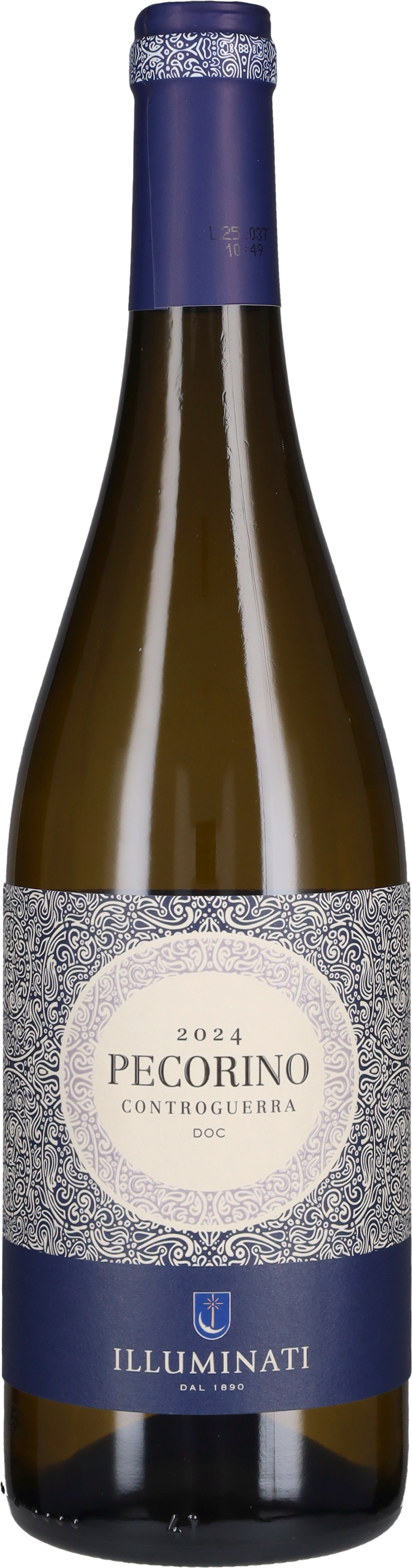
Pecorino Illuminati 2025The Pecorino by Illuminati is born in Abruzzo near Controguerra in the province of Teramo, a land always dedicated to vine cultivation. The winery "Fattoria Nicò" has a century-old tradition in wine production: it was founded by Nicola Illuminati in 1890, who immediately set the productive work thinking of a final artisanal product, authentic and linked to the land he worked. In the 1950s, the baton passed to his son Dino, who dedicated himself entirely to the enhancement of the Teramo territory and the native grape varieties that would otherwise be forgotten. Today, it is his sons Lorenzo and Stefano who work to carry the family tradition into the future. The grapes of the Pecorino by Illuminati are cultivated in vineyards in the municipality of Controguerra located about 250 meters above sea level. The subsoil is mainly composed of a medium-textured soil with a wide presence of fresh clay; the climate is predominantly continental with hot and humid summers and cold winters, characterized by cold temperatures and sporadic frosts. The exposure of the vineyards to the southwest guarantees an excellent ripening of the grapes. The latter are hand-picked after meticulous selection; in the winery, they are destemmed and pressed, and the must rests in steel and subsequently in barriques for about 4 months. The color of the Pecorino by Illuminati appears straw yellow with intense reflections tending towards greenish; the aromas released recall the fragrances of white flowers and yellow-fleshed fruit with final notes of exotic fruit, citrus, and green apple. On the palate, it presents a powerful and aromatic structure with an elegance and a final persistence that invites drinking. It pairs perfectly with dishes based on shellfish and mollusks, first courses seasoned with seafood and smoked salmon. Excellent wine to be consumed throughout the meal to accompany carefree lunches with friends or some local cuisine dishes to savor the genuineness of Abruzzo flavors.11,00 £*Shipping: 48,00 £Secure redirect to the provider
-
Pecorino d'Abruzzo Terraviva 2023brief spontaneous decantation in stainless steel tanks, only indigenous yeasts carry out the alcoholic fermentation at controlled temperature, at the end of which the mass rests for 6 months always in steel before bottling. The Pecorino d’Abruzzo from the Terraviva winery is a lively straw-yellow color. The nose evokes complex scents of citrus and wildflowers, supported by pleasant herbal notes. Fresh and savory on the palate, with a long, light, and harmonious progression. Due to its sensory attributes, this bottle represents an excellent accompaniment to seafood first and second courses, but also to not overly aged cheeses or various land-based appetizers.brief spontaneous decantation in stainless steel tanks, only indigenous yeasts carry out the alcoholic fermentation at controlled temperature, at the end of which the mass rests for 6 months always in steel before bottling. The Pecorino d’Abruzzo from the Terraviva winery is a lively straw-yellow color. The nose evokes complex scents of citrus and wildflowers, supported by pleasant herbal notes. Fresh and savory on the palate, with a long, light, and harmonious progression. Due to its sensory attributes, this bottle represents an excellent accompaniment to seafood first and second courses, but also to not overly aged cheeses or various land-based appetizers.15,00 £*Shipping: 48,00 £Secure redirect to the provider
-
Pecorino 'Chronicon' Zaccagnini 2025The Pecorino “Yamada” is a lively and cheerful expression of a grape variety that well narrates the expressiveness of the whites produced in the central regions of Italy. Fresh on the palate and aromatic on the nose, it is truly a valuable companion at the table, pairing well with both abundant appetizers and the entire meal, especially when matched with first and second courses based on fish and seafood. A versatile label, therefore, made only in steel, with which the Zaccagnini winery confirms itself as one of the most interesting local production realities. The “Yamada” is a pure Pecorino, a white grape variety that is widely spread within the regional borders of Abruzzo. The grapes, after manual harvesting, are taken to the winemaking facilities of Zaccagnini, where they are destemmed. This is followed by a soft pressing of the berries and cryomaceration; the must then ferments in stainless steel containers where the temperature is kept under control. The aging takes place for a few months only in bottle and then the wine can finally be marketed during the spring following the harvest. The Pecorino “Yamada” signed by the Zaccagnini winery develops in the glass with a typically straw-yellow color, influenced by pale reflections tending more towards greenish at the rim. Elegant and delicate on the nose, it is built around honeyed notes and sensations that recall fruit, even exotic in some nuances where a hint of grapefruit is noticeable. On the palate, it is medium-bodied, extremely drinkable thanks to a fresh sip, endowed with a pleasant citrus persistence on the finish. A label that, like all those produced by Zaccagnini, confirms its ability to combine quality with accessible prices for everyone.11,00 £*Shipping: 48,00 £Secure redirect to the provider
-
How do you like Pecorino Romano?
I am an AI and do not have personal preferences, but I can tell you that Pecorino Romano is a popular and versatile cheese with a rich, salty flavor. It is often used in Italian cuisine for grating over pasta dishes, salads, and soups. Its sharp and tangy taste makes it a great addition to many dishes, and it pairs well with bold red wines and fruity white wines. **
-
What are possible substitutes for Pecorino in recipes?
Possible substitutes for Pecorino in recipes include Parmesan, Grana Padano, Asiago, or Manchego. These cheeses have similar salty and nutty flavors that can provide a comparable taste in recipes. Additionally, if looking for a non-dairy substitute, nutritional yeast can be used to add a cheesy flavor to dishes. Keep in mind that the flavor profile may vary slightly, so it's best to adjust the quantity to taste. **
-
Which cheese should I add to the risotto: Gorgonzola, Parmesan, or Pecorino?
For a classic risotto, Parmesan cheese is the best choice as it has a nutty and salty flavor that complements the creamy texture of the dish. Gorgonzola can also be a good option if you want to add a stronger, tangy flavor to the risotto. Pecorino, on the other hand, has a sharper and saltier taste, which may overpower the other flavors in the dish. Ultimately, the choice of cheese depends on your personal preference and the flavor profile you want to achieve in your risotto. **
-
How do Pecorino and Parmesan differ in terms of price and taste?
Pecorino and Parmesan differ in terms of price and taste. Pecorino is typically less expensive than Parmesan due to the differences in production methods and aging processes. In terms of taste, Pecorino has a sharper and saltier flavor compared to the nutty and slightly fruity taste of Parmesan. The choice between the two cheeses often comes down to personal preference and the specific dish being prepared. **
Similar search terms for Pecorino
-
Pecorino 'Onirocep' Pantaleone 2024Il Pecorino “Onirocep” di Pantalone viene prodotto nelle Marche, in particolare nella zona di Ascoli Piceno in località Collonata Alta. L’attività è di Francesca e Federica Pantaleoni con l’aiuto di loro padre Nazzareno e del marito di Francesca Giuseppe, che svolge il lavoro di enologo. La filosofia di lavoro prevede un’attenzione particolare nei confronti dell’ambiente, dal momento che la scelta è da sempre stata quella di abbracciare il regime di coltivazione biologico, finalizzato a conservare l’equilibrio naturale del territorio, valorizzandone così le potenzialità. Ai piedi della valle che ospita le coltivazioni della cantina, vi è un fossato chiamato “Pantaleone”, parola di origini greche che significa “tutta la forza del leone” ed è collegata a un’antica leggenda popolare, secondo la quale quei terreni possedessero una capacità estrema di dar vita ai frutti migliori. I vigneti del Pecorino “Onirocep” di Pantalone sono esposti a sud-est, il che comporta un’escursione termica performante tra il giorno e la notte e un’irradiamento solare costante per uve ottimamente mature. Il terreno si presenta argilloso, il che garantisce la formazione di sostanza organiche da cui dipendono le capacità nutritive del terreno. L’ambiente circostante è abitato da diverse specie animali compatibili con i vigneti e le coltivazioni, tanto da coadiuvare la crescita della materia prima. La vendemmia è manuale e in cantina si svolgono le fermentazioni in acciaio seguita dalla criomacerazione. Affina 6 mesi in acciaio prima di essere imbottigliato. Nel calice il Pecorino “Onirocep” di Pantalone si presenta si un giallo paglierino con riflessi verdolini brillanti; il bouquet di profumi è ampio e variegato e spiccano sentori di pesca nettarina matura, fiori di ginestra ed erbe aromatiche come rosmarino, timo e agrume dolce buona mineralità finale. In bocca si avvertono calore e morbidezza bilanciati da leggera acidità sul finale che richiama la beva. In abbinamento è consigliato con piatti a base di salumi misti stagionati, primi piatti a base di pesce, verdure di stagione e funghi porcini e secondi piatti a base di crostacei. Ottimo per accompagnare la tavola della cena della Vigilia di Natale e sorseggiare i sapori autentici della terra marchigiana. Imbottigliato da Az. Agr. Pantaleone di Pantaloni Federica18,00 £*Shipping: 48,00 £Secure redirect to the provider
-
Pecorino Villa Medoro 2025The Pecorino from Villa Medoro is a young, fresh, and very pleasant wine born in the territory of Acri, in the province of Teramo. Here, the vineyards of the winery, climbing along the slopes of the Teramo hills at about 200 meters above sea level, benefit from the gentle sea breezes of the nearby Adriatic Sea and the minerality of the clay and limestone soils. The perfect fusion of the subtle freshness of the hilly climate, the delicate sapidity of the sea, and the warmth of the sun gives rise to this Abruzzese white, praised by wine critics as a beautiful revelation and by enthusiasts as one of the most refreshing, balanced, and pleasant expressions of this native grape variety from Abruzzo, rediscovered only a few years ago. The Villa Medoro winery, strongly committed to enhancing and spreading the Abruzzese winemaking traditions, loves to express the Pecorino in terms of simplicity and immediacy. The grapes are harvested during the month of September, at a state of good ripeness, and transported to the winery, where the bunches undergo a short cryomaceration at a temperature of 5-6°C. This prefermentative operation aims to extract as much as possible the aromatic substances of the grapes, ensuring cleanliness, finesse, and expressive clarity. After the alcoholic fermentation, carried out only in steel at a controlled temperature of 14-16°C, this white wine matures for a few months before being bottled. The Villa Medoro Pecorino stands out in the Abruzzese wine scene for its modern, immediate, and crystalline personality. It shines in the glass with bright straw-yellow hues and greenish reflections. The olfactory profile evokes expanses of wildflowers, with delicate hints of chamomile, yellow flowers, citrus, and ripe fruit. It offers a balanced, fresh, harmonious, and balanced sip, revealing a good sapidity in the final stages of tasting. The delicate, clear, and nuanced taste-olfactory profile promises remarkable gastronomic versatility and favors pairings with simple homemade dishes based on fish or vegetables. It also proves capable of enlivening with finesse and impeccable aplomb the moment of the aperitif or informal convivial occasions.10,00 £*Shipping: 48,00 £Secure redirect to the provider
-
Is it really important to use Pecorino when preparing Pasta Cacio e Pepe?
Yes, it is important to use Pecorino when preparing Pasta Cacio e Pepe because it is a key ingredient that gives the dish its distinct flavor. Pecorino is a hard, salty Italian cheese made from sheep's milk, and its unique taste is essential for achieving the authentic taste of Cacio e Pepe. Using a different type of cheese would alter the flavor profile of the dish and may not result in the traditional taste that is expected from this classic Roman pasta dish. **
-
What are electricity and high culture history?
Electricity history refers to the development and use of electricity as a form of energy, including the discovery of electricity, the invention of electric devices, and the establishment of electrical systems. High culture history, on the other hand, refers to the history of cultural and artistic achievements that are considered to be of high quality and sophistication, such as classical music, literature, fine arts, and theater. Both electricity and high culture history have evolved over time, shaping the way we live and appreciate the world around us. **
-
What is the difference between low culture and high culture in history?
Low culture refers to the cultural activities and products that are considered to be more common, popular, and easily accessible to the general public. This can include things like popular music, television shows, and mass-produced literature. On the other hand, high culture refers to the cultural activities and products that are considered to be more refined, sophisticated, and often associated with the elite or educated classes. This can include things like classical music, fine art, and literature that is considered to be more intellectually challenging. The distinction between low and high culture has been a source of debate and has evolved over time, but it generally reflects the social and class divisions within a society. **
-
Does anyone know about the Islamic Golden Age in architecture and culture?
Yes, the Islamic Golden Age was a period of great cultural and architectural achievements in the Islamic world, spanning from the 8th to the 14th century. During this time, Islamic scholars made significant advancements in fields such as mathematics, astronomy, medicine, and philosophy. In terms of architecture, the Islamic world produced stunning examples of mosques, palaces, and other structures, characterized by intricate geometric patterns, domes, and arches. This period also saw the development of beautiful decorative arts such as calligraphy, ceramics, and textiles. Overall, the Islamic Golden Age left a lasting legacy in both architecture and culture. **
* All prices are inclusive of VAT and, if applicable, plus shipping costs. The offer information is based on the details provided by the respective shop and is updated through automated processes. Real-time updates do not occur, so deviations can occur in individual cases. ** Note: Parts of this content were created by AI.